
If hard water stains have been giving you a hard time, it’s time to learn how to get rid of them. GIMILI Kitchen Faucet
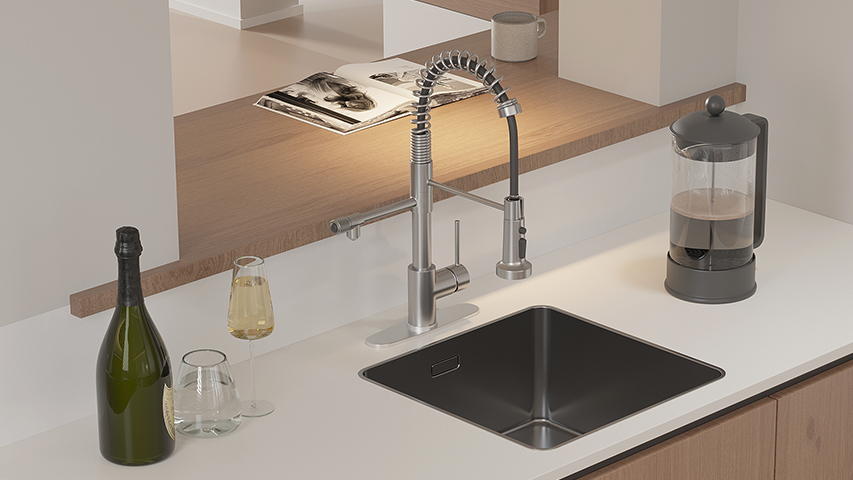
GIMILI 3 in 1 Commercial Style Pull Down Kitchen Faucet Brushed Nickel
It’s a bit strange to think of water in terms of hardness or softness, but the mineral content in water will indeed create hard water. It will also make cleaning your house a bit harder, thanks to stains and buildup left behind on glass, tiles, faucets, showerheads, and appliances.
Removing hard water buildup can be a chore if you don’t use the right cleanser and technique. While commercial cleaners like Calcium, Lime & Rust Remover make quicker work of removing stubborn stains, you might prefer natural cleansers. If so, add vinegar, lemon juice, and baking soda to your shopping list.
If hard water stains have been giving you a hard time, keep reading to learn how to get rid of them.
Before Getting Started
It’s always a good practice to ventilate the area you’re cleaning in, regardless of whether you’re using a natural ingredient vinegar or a stronger chemical-based product. The same goes for wearing gloves to protect your hands, especially if you’ve got sensitive skin.
If using a commercial cleanser, be sure to follow all instructions. And no matter what product or technique you choose, always test it out in an inconspicuous area before diving in completely.
:max_bytes(150000):strip_icc():format(webp)/GettyImages-1809816168-c0959ca807904190b293f044750d2815.jpg)
Health And Safety Concerns
If you opt for a commercial cleanser, please read the label carefully and observe any warnings about what not to mix with it. For example, Calcium, Lime, & Rust Remover should never be combined with bleach or other household cleansers, including pool cleaning chemicals.
What You’ll Need
- White vinegar
- Water
- Lemon juice
- Baking soda
- Brush or sponge
- Commercial hard water stain remover, like Calcium, Lime, & Rust Remover
How To Remove Hard Water Stains
When using a new cleaning method, it’s always best to do a spot check first to ensure that the cleaning agent, whether natural or chemical-based, won’t harm the affected surface.
Method 1: Vinegar Solution
The acid in vinegar makes it a strong yet natural ingredient for cleaning tasks.
- Combine white vinegar and water in equal parts. Fill a spray bottle with the solution for easy application, or simply dip a soft cloth in it.
- Apply the solution to the affected area and let it sit for a few minutes.
- Scrub the stain gently with a soft brush or sponge.
- Rinse with clean water.
- Repeat the above steps as necessary until the hard water stains are removed.
Method 2: Lemon Juice And Baking Soda Paste
Lemon juice is also acidic and works well as a cleaning agent, plus it leaves behind a nice, fresh scent.
- Sprinkle some baking soda in a bowl. Add a bit of lemon juice and mix until it forms a paste.
- Apply the paste to the surface and let it sit for a few minutes.
- Scrub the stain gently with a soft brush or sponge.
- Rinse with clean water.
- Repeat the above steps as necessary until the hard water stains are removed.
Method 3: Commercial Hard Water Stain Remover
There are some commercial cleaners on the market that make it easy to apply and scrub away hard water stains. Always follow the instructions on the product label, but in general, this is the process:
- Apply product to hard water stains.
- Let it sit for the recommended amount of time—no longer, or it could damage the surface.
- Scrub with a brush or sponge to hasten stain removal.
- Rinse with clean water.
- Repeat as necessary.
Calcium, Lime, & Rust Remover has long been known as an effective commercial cleanser for hard water stains and other buildup. We spoke to a CLR Brands representative to get some advice on how to properly use the product.
In general, Calcium, Lime, & Rust Remover is fine to use on ceramic and porcelain tile and chrome, fiberglass, and stainless steel surfaces. It can also be used on toilet bowls, dishwashers, washing machines, pots and pans, kettles and coffee pots, humidifiers, and even pet bowls. When in doubt, always do a spot test in a hidden area first.
For hard water stains on flat surfaces:
- In a well-ventilated area, dilute the solution with an equal part of warm water.
- Using a brush, cloth, or sponge, apply the solution directly to the stain.
- Let stand for two minutes, then rinse with cold water.
- If the spot test is effective, continue on to the entire surface, rinsing with cold water after two minutes.
- Repeat the process if needed to remove stains.
For chrome and stainless steel shower heads and faucets:
- In a well-ventilated area, dilute the solution with an equal part of warm water.
- Submerge the shower head or faucet in the solution for no more than three minutes. If possible, remove the head or faucet for easier application.
- Scrub with a brush or sponge.
- Rinse with cold water.
“Calcium, Lime, & Rust Remover is my go-to for cleaning hard water stains,” says Sara McDaniel, the Minden, Louisiana-based designer and home renovation expert behind Simply Southern Cottage. It works like a charm on glass showers and even vintage tile.
“I recently restored eight historic Spanish villas and the original tile from 1931 was covered in hard water stains,” she says. “Calcium, Lime, & Rust Remover was our go to make the tiles look like new!”