
Pipe threads are an essential part of many plumbing, industrial, and construction systems. They are used to connect pipes and fittings, ensuring a tight, leak-proof seal. Two common types of pipe threads in North America are NPT (National Pipe Tapered) and NPS (National Pipe Straight). Though they may seem similar, these thread types serve different purposes and are not always interchangeable. In this post, we’ll explore the key differences between the two pipe threads, their applications, and when to use each type.

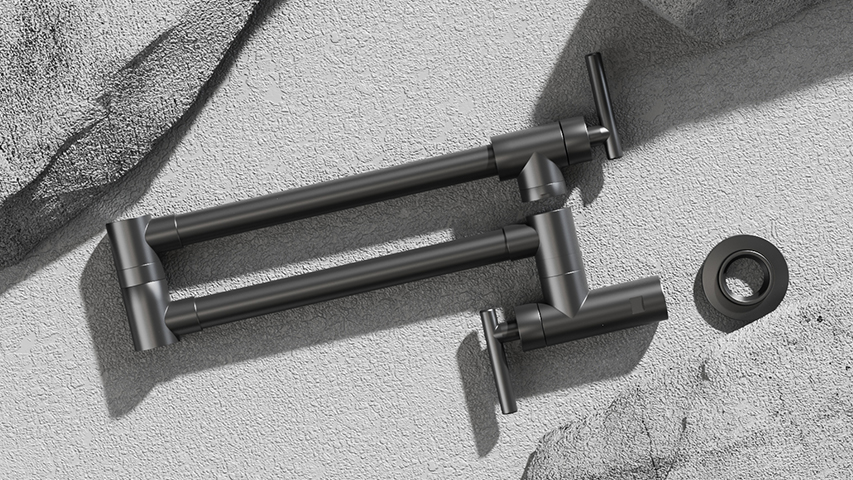
GIMILI Pot Filler Kitchen Faucet Oil Rubbed Bronze
What Are Pipe Threads?
Before diving into the differences between NPT and NPS threads, it’s important to understand what pipe threads are. Pipe threads are helical ridges that are cut into the ends of pipes or fittings to enable them to screw together. When matched correctly, pipe threads create a seal that prevents leaks. There are two main types of pipe threads: tapered and straight.
- Tapered threads narrow slightly from end to end. As the pipe is screwed in, the threads compress against each other, creating a tight seal.
- Straight threads are uniform in diameter throughout the length of the thread. They are often used in situations where a mechanical fit, rather than a seal, is required.
Now let’s dive deeper into NPT and NPS, the two main types of pipe threads.
What is NPT?
NPT, or National Pipe Tapered threads, are the most common type of thread used in the United States and Canada for sealing pipe fittings. As the name suggests, National Pipe Tapered threads are tapered, meaning the diameter of the thread decreases along the length of the pipe. This tapering allows the threads to form a tight seal as the pipe is screwed in, making them ideal for systems that carry liquids or gases.
Key Characteristics of National Pipe Tapered threads:
- Tapered Design: NPT threads are cut with a taper of approximately 1°47′. This taper causes the threads to compress against each other, creating a mechanical seal that becomes tighter as more torque is applied.
- Pressure-Sealing: The tapered design ensures a pressure-tight seal when properly torqued and sealed with appropriate materials, such as Teflon tape or pipe dope.
- Standards: NPT threads adhere to the ANSI/ASME B1.20.1 standard. This ensures consistency in pipe fittings across manufacturers and industries.
Applications of National Pipe Tapered threads:
- Plumbing: NPT threads are commonly used in household plumbing systems for water and gas supply lines.
- Industrial: In industries like oil and gas, NPT threads are used in high-pressure systems where a strong, leak-proof seal is essential.
- Compressed Air Systems: NPT fittings are often used in pneumatic systems due to their reliability in sealing air under pressure.
What is NPS?
NPS, or National Pipe Straight threads, differ from NPT threads in that they are not tapered. Instead, National Pipe Straight threads are straight, meaning the diameter remains constant along the length of the pipe. Because of this, NPS threads do not form a seal on their own and often require an additional sealing mechanism, such as a gasket or O-ring.
Key Characteristics of National Pipe Straight threads:
- Straight Design: Unlike National Pipe Tapered Threads, National Pipe Straight Threads have no taper, meaning they do not compress against each other to form a seal.
- Mechanical Fit: National Pipe Straight threads threads are used where the primary requirement is a precise mechanical fit, rather than a pressure-tight seal.
- Standards: National Pipe Straight threads threads follow the ANSI/ASME B1.20.1 standard, which ensures compatibility with National Pipe Tapered Threads in some applications, though they are not directly interchangeable.
Applications of National Pipe Straight threads:
- Electrical Conduit: National Pipe Straight threads are often used in electrical conduit systems, where the connection is not required to be pressure-tight but must still provide a secure mechanical fit.
- Fire Protection Systems: In certain fire sprinkler systems, National Pipe Straight threads are used in combination with a gasket or sealant to create a watertight connection.
- Mechanical Assemblies: National Pipe Straight threads are also used in situations where components need to be fastened together without the need for a leak-proof seal.
National Pipe Tapered Threads vs National Pipe Straight Threads Pipe Threads: Key Differences
While both NPT and National Pipe Straight Threads adhere to the same general threading standards (ANSI/ASME B1.20.1), there are several important differences between the two:
- Taper vs. Straight: The most obvious difference is that National Pipe Tapered Threads are tapered, while National Pipe Straight Threads are straight. This difference impacts how the threads seal, with NPT threads forming a pressure-tight seal and NPS threads requiring additional sealing mechanisms.
- Sealing Mechanism: National Pipe Tapered Threads rely on the tapered design to create a seal. When torqued, the threads compress and form a leak-proof connection. National Pipe Straight Threads, being straight, do not form a seal on their own and must use a gasket, O-ring, or thread sealant to prevent leaks.
- Applications: National Pipe Tapered Threads are commonly used in systems that need to carry fluids or gases, where a pressure-tight seal is critical. National Pipe Straight Threads are more often used in mechanical applications where alignment and precision are more important than sealing.
- Interchangeability: While National Pipe Tapered Threads and National Pipe Straight Threads may appear similar at first glance, they are not directly interchangeable. Attempting to connect an NPT fitting to an National Pipe Straight pipe may result in a loose or leaky connection.
Can National Pipe Tapered Threads and National Pipe Straight Threads Be Used Together?
In certain low-pressure applications, it may be possible to use National Pipe Tapered Threads and National Pipe Straight Threads together, but this is generally not recommended. Because National Pipe Tapered Threads are tapered and NPS threads are straight, the two will not form a secure, leak-proof connection on their own. If you must use these thread types together, additional sealing mechanisms like pipe dope, Teflon tape, or O-rings should be used to ensure a proper seal.
In most cases, it is best to use the correct thread type for the specific application to avoid issues with leaks or mechanical failure.
Conclusion
When choosing between National Pipe Tapered Threads and National Pipe Straight Threads, it’s important to consider the specific requirements of your project. National Pipe Tapered Threads are ideal for systems that require a pressure-tight seal, such as plumbing, gas lines, or compressed air systems. National Pipe Straight Threads, on the other hand, are better suited for applications where a precise mechanical fit is needed but pressure sealing is not the primary concern.
By understanding the differences between National Pipe Tapered Threads and National Pipe Straight Threads, you can ensure that your piping system is both safe and effective for your intended use.